
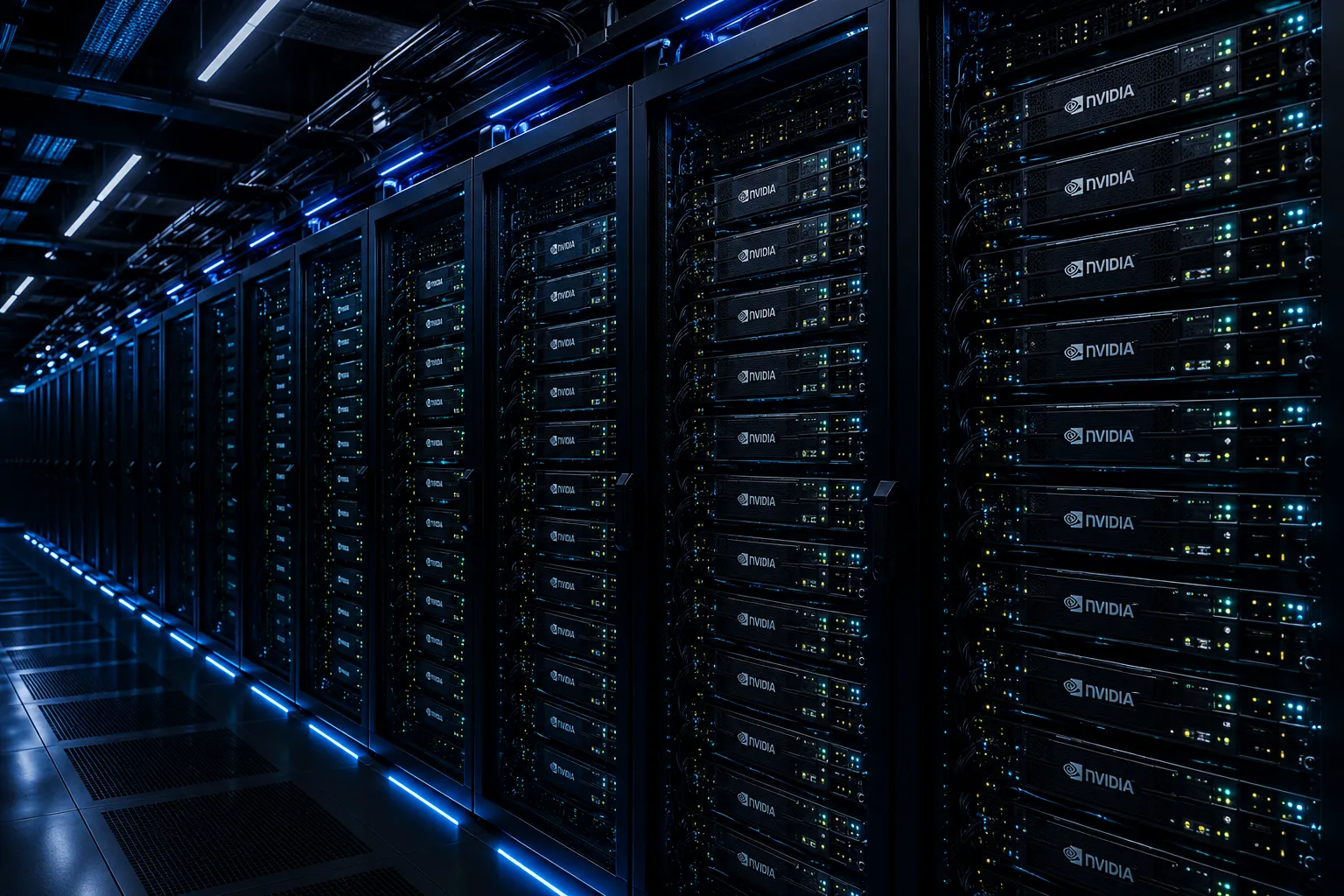
The explosive growth of generative AI and large-scale GPU training clusters has rewritten many core assumptions of data center design. While most conversations focus on power density, cooling and PUE, one less-discussed yet make-or-break constraint is equipment weight.
Legacy data centers were engineered for relatively lightweight servers. Today’s dense AI racks packed with high-end GPUs, battery units, busbars and auxiliary hardware are substantially heavier. If a facility’s floor structure cannot support these concentrated loads, operators face costly retrofits, operational delays, safety hazards, or may be unable to deploy GPU hardware entirely.
In this post, we break down the structural challenges posed by heavy AI racks, explain key load terminology, and share design considerations and best practices for data center owners, colocation providers, contractors and system integrators.
1. How Much Heavier Are AI Racks Compared to Traditional IT Racks?
A standard enterprise server rack from the cloud era typically weighs between 300 kg and 600 kg when fully loaded — well suited for traditional raised floors rated for general IT use.
Modern AI GPU racks tell a different story:
- Dense GPU racks commonly range from 800 kg to 1,200 kg
- Racks integrated with onboard UPS, battery packs and power distribution hardware can exceed 1,500 kg
- Multi-GPU clusters, liquid cooling manifolds and heavy busbar assemblies add further concentrated mass
Total rack weight is only part of the concern. The load is highly concentrated. Thousands of kilograms rest on just four small rack feet, and this point loading represents the biggest headache for structural engineers.
2. Understanding Uniform Load vs Concentrated Point Load
Two critical terms guide data center structural planning, and confusing them is a frequent source of mistakes.
Uniform floor load (UFL) refers to the distributed load rating, measured in kN/m² or psf (pounds per square foot). Many older colocation spaces advertise an impressive uniform load rating, which can seem reassuring at first glance.
However, concentrated point load describes the pressure exerted directly beneath rack feet. A floor slab or raised access floor may satisfy a high uniform load rating yet still fail locally under the point load from a GPU rack foot.
For example:
-A raised floor panel rated for 12 kN/m² uniform load may still buckle under a single 40 kN point load from one rack foot.
-Structural engineers often specify load-spreading plates or base shims to spread pressure from rack feet across a wider area of the slab.
This distinction explains why a high rating on a specification sheet does not automatically mean the space is ready for AI racks.
3. Raised Access Floors: A Major Bottleneck for AI Deployments
Raised floors are standard in traditional data centers, supporting underfloor air distribution, cable routing and power cabling. Unfortunately, they are often the first component to hit capacity limits under heavy AI hardware.
Common raised-floor challenges:
- Standard panels and pedestals are designed for light-to-medium server racks, not 1-ton GPU racks
- Pedestal deflection, panel cracking or joint failure can develop gradually over time, creating hidden safety risks
- Underfloor cable trays, busbars and cooling piping add additional dead load that amplifies structural stress
Many existing colocation sites must upgrade their raised floor systems before hosting AI tenants. Typical upgrades include heavy-duty reinforced panels, thicker pedestals, extra cross-bracing and direct slab support brackets that bypass the floor panel altogether.
4. Slab Design, Reinforcement and Retrofit Limitations
For newly built AI data centers, structural teams design the concrete slab from the outset to accommodate heavy concentrated loads. This includes thicker slabs, upgraded rebar, post-tensioning and carefully planned column spacing.
Retrofitting older buildings is far more complex and expensive:
- Existing slab thickness and reinforcement may be difficult or impractical to modify
- Installing steel beams or support girders beneath the slab raises construction costs and extends timelines
- Reinforcement work frequently requires partial or full facility shutdowns
- Local building codes and structural inspections add layers of approval requirements
For investors and operators, this creates a key business principle: a site with low-cost reliable power can still be unsuitable for AI if its structure cannot support the weight of GPU racks.
5. Rack Layout, Aisle Density and Load Distribution Strategy
Even if the slab itself has sufficient strength, the way racks are arranged matters greatly.
Engineers avoid grouping all maximum-weight GPU racks within a small zone. Over-concentration creates structural stress hotspots that exceed design limits.
Practical layout rules for AI facilities:
- Distribute heavy racks across the slab to balance the total load
- Position the heaviest racks above primary beams or load-bearing columns wherever possible
- Avoid placing ultra-heavy racks near slab expansion joints or weak span sections
- Maintain accurate weight records for every rack, accounting for future upgrades such as liquid cooling add-ons
Structural capacity is not static. Adding batteries, PDUs or liquid cooling hardware at a later stage can push an already loaded rack beyond its safe design limit.
6. Secondary Loads: Don’t Forget Supporting Infrastructure
GPUs and servers inside racks are not the only heavy items within the white space. Supporting auxiliary infrastructure contributes substantially to the total building load:
- Rack-mounted lithium-ion battery systems
- Liquid cooling reservoirs, pumps and heat exchangers
- Large busbar trunking systems
- Heavy cable bundles and cable management assemblies
- In-row cooling units and rear-door heat exchangers
Many project teams calculate GPU rack weight but overlook these auxiliary components. Cumulative extra weight can push a structurally compliant zone into an overloaded state. This is where durable, robust auxiliary rack components and load-spreading accessories deliver real value.
7. Compliance, Insurance and Operational Risk
Structural failure in a data center is rare, yet the consequences are severe: equipment damage, cluster outages, interrupted training workloads, safety incidents and costly insurance claims.
Nearly all insurers covering AI colocation facilities require certified structural calculations before approving heavy GPU deployments. Local building codes also demand third-party structural sign-off for load modifications.
Operational best practices:
- Engage a qualified structural engineer to review floor capacity before signing a colocation lease
- Document the as-deployed weight of every rack
- Conduct periodic inspections for slab cracking, floor deflection or pedestal movement
- Include plans for future hardware upgrades in the original structural load model
Conclusion
Power and cooling dominate conversations around AI data centers, but structural load capacity acts as a silent gatekeeper. The substantial weight of modern GPU racks, batteries and cooling hardware creates concentrated point loads that older data center floors were never engineered to withstand.
Whether you are planning a new AI facility, retrofitting an existing colocation space or selecting a site for GPU clusters, structural load analysis must take place early in the design phase. Thoughtful rack layout, heavy-duty raised floor systems, load-spreading hardware and certified engineering reviews mitigate structural risk and enable stable, long-term AI operations.
As AI hardware continues to grow denser and heavier, structural engineering will remain one of the core constraints defining where and how large AI clusters can scale.